Sunday, January 24, 2016

Prehistoric Burins and the SHADOWS on the TRAIL Pentalogy


Figure One. Scottsbluff knife form from Wilson County, Texas. The most interesting feature 
of this, 10,000 years plus beauty, is its burinated tip.
John Bradford Branney Collection.  

A prehistoric burin is a specialized, chisel-like stone tool created by driving a flake or flakes off the edge of another flake, biface, or blade to produce a ninety-degree edge for working hard substances such as ivory, antler, and bone. The sharp corners created by the burin were so useful that prehistoric knappers deliberately made them. The removed edge fragment is called a burin spall.

In the knapping process called burination, a small, relatively thick flake is removed from a flake, blade, or biface using a snapped termination or previous burination scar as the knapping platform. Burination can also be used to remove a sharp edge for the safe handholding of a knife form. Burination was extremely common in the “Old World” Paleolithic of Europe, Siberia, and Beringia. Paleoindians in North America also made and used burins. For some reason, it appears that the Clovis culture only used burination in rare instances, but it became quite popular during Folsom and Cody Complex times. Most of my stone tools with burins came from my Folsom and Cody Complex sites.
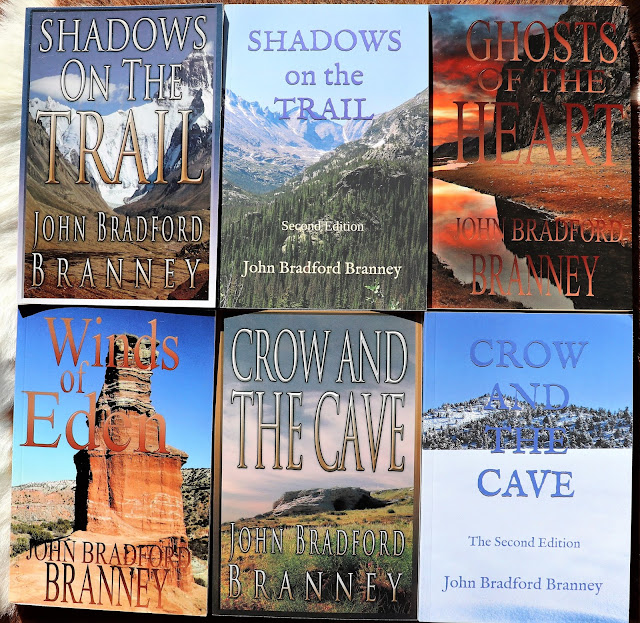
Figure Two. Burin tip (B) of the Scottsbluff knife form
photographed in figure one. The 'stop notch' (N) ensured
that the burin flake did not travel too far 
down the edge of
the biface or into the body of the biface. 

Figure one is a photograph of a 3.7 inch long Scottsbluff knife form, made from Edwards Chert and found on private land in Wilson County, Texas. This artifact is Early Archaic with an approximate age of 10,000 years. The knife form had two or three resharpenings that have reduced its overall length, but the most interesting feature of this Scottsbluff knife form is its tip (figure two). The tip of the knife form at some time was pressure flaked into a burin tip (an engraver) and was re-tipped two more times. Burination strengthened the tip of the Scottsbluff knife form exponentially, keeping the edge from crushing and failing while engraving hard objects.
Most burins and burin spalls are unspectacular features. Most people do not even recognize them. Caution has to be applied when differentiating an impact fracture from a burin. Not every missing sliver off an artifact is a burin! Finding impact fractures on an artifact is far more common. Usually, after I post artifacts with burins, I receive a rush of requests to look at people's artifacts who think they might have burins. Identifying burins from photographs is difficult at best. It is best to have the artifact in hand so that you can feel the edges for use wear and examine the artifact. All of my artifacts that I claim to have burins have gone through thorough examination and scrutiny.       

Figure Three. My heart was pounding!
Figure three is an in situ photograph of a Scottsbluff (Cody Complex) point half-buried in the sandy creek bottom at my SHADOWS on the TRAIL site in northern Colorado. The day was August 23, 2008, when I spotted this Scottsbluff point lying in the sand. It took my breath away and my heart pitter-pattered. It was obvious what it was, but the tip was buried. The square base and the flaking pattern were definitely Cody Complex. After a somewhat extended photoshoot, I pulled the Scottsbluff point out of its sandy grave. My heart sank when I saw that an impact fracture had taken off the tip of the point.   

Figure Four. Scottsbluff point with a blunted tip.  
I yelled out the PG-13 version of "DRAT!". Quite frankly, even though I had found a tremendous artifact I was disappointed because of the broken tip. My first reaction was that this beautiful 2.8 inch-long Scottsbluff point ended its useful life by hitting bone or rock and fracturing its tip. I pocketed my find and went back to hunting for the rest of the day. It wasn't until I got home later that night and had a chance to study the point that I realized that the original Scottsbluff point was probably decommissioned because of an impact fracture and the creative Cody Complex knapper recommissioned the point into a stone tool by intentionally creating a double-sided burin for use in scraping wood and hides (figure five).

Figure Five. Twin burin edges with a chisel tip. 
My interpretation of the history of this Scottsbluff point goes something like this; The maker of this Scottsbluff point used a dendritic jasper as the raw material. The dendritic jasper looks like some of what I find on the Hartville Uplift of Wyoming. The finished projectile point at some stage suffered damage to its tip. Instead of repairing the projectile point, the Cody Complex knapper refurbished the broken point into a knife form with double burins. He or she removed burin spalls on both sides of the impact fracture (figures five and six). Then the innovative knapper created a chisel-like edge on the rounded tip. He or she could have used this Scottsbluff knife form as a burin, knife, scraper, and chisel for use on meat, bone, wood, and hides.
Figure Six. Chisel tip is well polished.  


The raw material at the tip of this Scottsbluff knife form has a different color and texture than the rest of the artifact. I attribute this to polish or use-wear from the way its owner used it.  There is evidence that the  owner might have re-tipped or repaired the chisel and burins once or twice since that area of the knife form has a different flaking pattern than the rest of the biface.          


Another important feature about burins when found in Paleoindian contexts, they seldom show use wear on the edge near where the burin spall detached in front of the striking platform. Instead, use-wear is usually found on the edge adjacent to the striking platform or tip. In the case of this last Scottsbluff point, the most use wear was at or near the tip.

So, there you have it. A couple of Cody Complex burin examples. You will have to read the SHADOWS ON THE TRAIL Pentalogy to see how the Folsom Complex used burins. All the information needed to order your copies of my book series is below. 
Don't miss out on a prehistoric adventure you will never forget!  


Saturday, January 9, 2016

V is for Pleistocene Violence and S is for SHADOWS ON THE TRAIL!


CLICK THIS LINK for SHADOWS ON THE TRAIL


What was the Pleistocene like for humans around 10,700 years ago? In the SHADOWS ON THE TRAIL I wrote about what I thought life was like for a particular tribe of Paleoindians called the Folsom People. I believe prehistoric humans not only had to deal with the large and fierce predator animals of the Pleistocene, but also predatory humans, as well. You might disagree with my last point, but the evidence from some of the prehistoric skeletons found would indicate that it was not one big happy human family in Prehistoric America. You might also have the opinion that there were so few humans around ten thousand years ago, that the chances of different tribes coming together was slim and when they did meet, why would they be hostile, there were enough resources for everyone!  
2000 B.C. Cain and Able were a different time
and place than SHADOWS ON THE TRAIL,
but human nature was the same.


My belief is that violence and coveting thy neighbor's belongings is inherent in humans' nature and always has been, even at the dawn of human time. Below is a passage from SHADOWS ON THE TRAIL, in which a tribe of humans called the Mountain People want what another tribe has and the Mountain People will resort to violence to obtain it. I hope you enjoy. 
       
To'sarre watched Ei Hanit disappear over the hill and then led the other two warriors back up to the boulder on the hill so that they could watch the village. The people in the village kept up their festivities at the campfires until the moon was high in the sky and then one after another they retired to their tipis for sleep. The last person went to sleep in early morning, leaving just two sentries sitting at a campfire. To'sarre pushed away from the boulder and walked quietly towards the warriors’ camp. As he walked, he blew hard into his hands trying to warm them up. It was a cold summer night and not a good night to be without a campfire. To'sarre found Ei Hanit asleep, lying against the base of a large boulder. To'sarre reached out with his left hand, touching the shoulder of Ei Hanit. All of a sudden, To'sarre’s forearm felt excruciating pain when Ei Hanit’s right arm flew up from his lap, driving To'sarre’s arm up into the air. Then as quick as a rattlesnake, Ei Hanit’s left hand gripped To'sarre’s throat and pulled him close to his face.


“What do you want?” Ei Hanit hissed.


“It is almost dawn and the people in the village will be moving about,” To'sarre replied, struggling to speak through his constricted windpipe.


“Gather the warriors on the hill,” Ei Hanit said, shoving To'sarre away.

On the hill, Ei Hanit and To'sarre looked down on the village. The village was completely dark, except for the flames coming from one campfire.

“Two sentries at that campfire,” To'sarre said. “No wolf dogs to warn them.”

“Send our two best warriors to kill the sentries, quietly,” Ei Hanit ordered. “Then attack from this side of the village. The river will prevent them from escaping to the north. Go tipi by tipi and kill everyone except women and children. They can carry our plunder and be our slaves.”

“What about the old?” To'sarre asked.

“Kill them all,” Ei Hanit replied.

To'sarre nodded to Ei Hanit and turned to leave. Ei Hanit grabbed him by the arm and demanded, “Kill them quietly!”

To'sarre crept down the backside of the hill. To'sarre understood why the Mountain People needed food and supplies from other villages, but he could not understand killing people for the sake of killing. However, To'sarre knew better than to ignore Ei Hanit’s orders, otherwise, Ei Hanit would have him and his family killed.


You are going to have to read SHADOWS ON THE TRAIL to find out what happens next, but I can guar-an-tee you that what happens will both surprise and shock you. 


Once you have read the SHADOWS ON THE TRAIL, then you can read the rest of the trilogy and JOIN THE ADVENTURE!  


Saturday, December 12, 2015

Knapping a FOLSOM POINT with Chayton!


FIGURE ONE. A perfect 2.2 inch long Folsom projectile point found by
Lee Pinello Jr. on November 10, 1968 on a family farm in northern Colorado.
Note the flute or channel running up the middle of the point. John Branney Collection..   

My prehistoric adventure series titled the SHADOWS ON THE TRAIL QUADRILOGY took place around 10,700 years ago in what we now call Texas and Colorado. The SHADOWS ON THE TRAIL QUADRILOGY is about the challenging survival of a group of Paleoindian hunters and gatherers called the Folsom People. What makes the SHADOWS ON THE TRAIL QUADRILOGY different from your ordinary fictional adventure is that the Folsom People actually existed in North America’s prehistoric past. How do we know the Folsom People existed? Easy, they left behind a very distinct calling card, a culturally diagnostic stone projectile point that was named Folsom for the place it was first documented; Folsom, New Mexico. 
FIGURE TWO. 
Click for SHADOWS ON THE TRAIL  

Folsom points (Figure one) are thin, small to medium size, well-made projectile points with convex sides, a concave basal edge, sharp basal corners and ground stem edges. What makes Folsom projectile points distinctive from other prehistoric stone projectile point types? Besides the remarkable workmanship, the most distinctive characteristic of Folsom projectile points are the flutes or channels that run most of the length up the middle of the projectile point, starting at the base. The knapping skill required to create flutes on a Folsom projectile point is without equal in America’s prehistory. Even modern day knapping experts are challenged in making replica Folsom projectile points using the same tools and materials that were available to Folsom People in the Pleistocene.

When the Folsom People created these thin, fluted, projectile points, they not only created an important component in their weaponry, but they also created works of art. Folsom projectile points are arguably the finest projectile points ever made in North America. No one has yet confirmed the exact manufacturing process that Folsom People used to make these fluted projectile points. This is not to say that people do not have their pet theories. In fact, you can add me to that list of having a pet theory on how Folsom People made their projectile points.

In the first book of the QUADRILOGY titled SHADOWS ON THE TRAIL, I wrote about the
FIGURE THREE. Folsom point surface found on 
private land in Natrona County, Wyoming. 
John Branney Collection.  
manufacturing process the Folsom People may have used to make fluted projectile points. Since there has never been any exact evidence as to how the Folsom point makers made fluted projectile points, we have to make some assumptions. 


In the scene below from SHADOWS ON THE TRAIL, a young Folsom hunter named Chayton was learning how to make fluted projectile points from Tarca Sapa, a salty old tribal healer. In this scene Chayton shows up and wants Tarca Sapa to tutor him on the finer points of making fluted projectile points. 

“I have spear points for our journey, but I need you to help me flute them,” Chayton requested.

“I have shown you how to flute before. Why have you not learned what I have taught you?”

“I do not want to ruin these spear points since we leave the canyon tomorrow.”

“Do you think I have nothing better to do than to teach you something I have already taught you?” Tarca Sapa queried. “I will watch you flute only one. The rest you must do yourself.”

Chayton had expected this reaction from Tarca Sapa. It was the old man’s way. Tarca Sapa always complained, but always found the time to ensure Chayton learned properly. Chayton handed Tarca Sapa the spear points, one at a time. Each spear point was approximately the length of a finger and wider than a thumb. The tip of each spear point was slightly rounded, but still dangerously sharp while the base of the spear point, where the spear point attached to a wooden shaft, had two sharp ears. In the middle of the spear point’s base, between the two ears, Chayton had knapped a small square platform. When hit with an antler hammer precisely in the right place, the rock would crack and a long thin flake would detach from the middle of the spear point. A flute channel would remain where the long thin flake detached. How well this square platform was constructed and then struck with the antler hammer meant the difference between a good spear point and a broken spear point.

The platform was where Tarca Sapa focused his eyes. Tarca Sapa looked at each spear point carefully and put each inspected spear point in one of two piles. Once his inspection was over, Tarca Sapa touched the pile with seven spear points and said, “These points are good, the others need work. Now, let me see you drive a flute channel into the spear point.”

With his hands shaking, Chayton opened up his leather pouch and pulled out two thick pads made from buffalo hide and two elk antler hammers. He sat down on a nearby rock and covered his legs with the thick pads. He placed a spear point, tip down, along the inside of his left thigh and then placed an elk antler hammer horizontally on top of the platform at the base of the projectile point. He braced the other end of the elk antler hammer against the inside of his right thigh. When Chayton had the hammer precisely lined up with the small square platform, he took the second elk antler hammer in his right hand and swung down hard on top of the first elk hammer. Nothing happened.

Flustered, Chayton looked over at Tonkala hoping that she was not watching. Chayton then looked at Tarca Sapa hoping for some words of encouragement, but Tarca Sapa only stared straight ahead at the spear point still resting in Chayton’s lap. Chayton nervously lined up the spear point, this time swinging the hammer even harder, striking the spear point with much more force. A solid cracking sound came from the spear point and Chayton looked down and saw the long thin flake that had detached from the spear point. To Chayton’s delight, the spear point had a beautiful flute channel running its entire length.

"It looks like you don’t need me after all.” Tarca Sapa said with a smile. “Take the rest of the spear points and finish them.”


FIGURE FOUR. 2.5 inch long
Folsom preform certified by 
Greg Perino*. 
John Branney Collection.    
FIGURE FIVE. Striking platform to
create flute on projectile point.
FIGURE SIX. Rounded and beveled tip
of projectile point.

     The fluted points that Chayton took to Tarca Sapa were not finished and looked like the unfinished Folsom preform projectile point in FIGURE FOUR. An anonymous collector found this Folsom preform projectile point in Mecosta County, Michigan. The material is Norwood Chert. This particular preform was ready for fluting. The Paleoindian knapper had pressure flaked both faces of the preform leaving closely spaced flakes terminating near the middle of the biface. He or she rounded, beveled and abraded the distal end or tip of the preform which aided the fluting process (FIGURE SIX).  ight abrasion and grinding on the tip. Isolation of the central portion of the preform base or proximal end took place, leaving a platform nipple in the center of the base. Two pressure flakes were removed from either side of the platform nipple to allow the maker's antler punch to follow the channel flake easier. The platform nipple was beveled, ground, and polished. It was ready for Side A to be fluted. Age somewhere between 10900 and 10200 years ago. Finder unknown. Perino certification. Ex John Baldwin and Ron Van Heukelom Collections. John Branney Collection.

FIGURE SEVEN. Expert knapper Bob
Patten's pet theory of the way Folsom
People fluted their projectile points.
From Mr. Patten's book
Old Tools - New Ways..


* One or two knowledgeable people have called
this preform a Barnes Clovis, an older and
possible ancestoral point  to Folsom. They called
it a Barnes Clovis based on provenance. It
is impossible to determine whether this
point is Folsom or Barnes, I am going with 
my and Greg Perino's opinion


To assist the flutes, the Paleoindian knapper isolated a striking platform in the center portion of the projectile point base or proximal end. The Paleoindian knapper accomplished this by creating a small nipple or striking platform in the center of the preform base (FIGURE FIVE). Then, he or she removed two pressure flakes from either side of the striking platform so that the maker’s antler punch could reach the striking platform without interference from the rest of the point. The Paleoindian knapper stabilized the striking platform or nipple by beveling, grinding, and polishing it.

This Folsom preform would have made Tarca Sapa very happy! Read the SHADOWS ON THE TRAIL QUADRILOGY for all the stories!    


Thursday, November 19, 2015

Midland v. Folsom and the Shadows on the Trail

Figure One - 2.0-inch long projectile point from Wyoming. Some might call this a Folsom 
point made on a flake (pseudo flute) while others might call it a Midland point. 
John Bradford Branney Collection.    

Fourth Edition 

I love researching archaeological reports about Paleoindians for my historical fiction books. I take what I learn about Paleoindian lifestyles and spin a yarn that portrays how Paleoindians might have lived. I love breathing life into Paleoindians and the challenges they faced 12,600 years ago. From what we know in the archaeological record, 'word of mouth' and 'hands-on' instruction were most likely the methods used for Paleoindians to pass on traditions to the younger generation. Archaeologists have not found any written documentation dating back to the time of Paleoindians in North America. 

The passage below in red is from the third book in my five-book, historical fiction series on Paleoindians. This particular book is titled WINDS of EDEN from the SHADOWS on the TRAIL Pentalogy. The series takes place around 12,500 years ago on the high plains of Texas, Colorado, Wyoming, and South Dakota. In this passage, an elderly man is showing his grandchild how to make a fluted projectile point that we now call a Folsom point. Here is a tiny taste of WINDS of EDEN;  
Click for My Books
The old man woke up from his nap when the sun was starting its descent in the sky. He reached over and picked up his satchel. He pulled out a large red and gray striped rock and sat staring at it. He rubbed the rock between his thumb and forefinger while thinking about everything that had happened to him since he had carried the rock from the canyon. Much had happened in his life since then, some of it good and some of it bad. When the old man finished reminiscing, he gently placed the red and gray striped rock back into the satchel. Then, with satchel in hand, the old man stood up and left his tipi. When he was outside the tipi, he had to shield his aged eyes from the bright sun. He slowly edged his way to a flat boulder next to his campfire where he sat down. Then, he pulled five unfinished spear points from the satchel. He laid the unfinished spear points down on the boulder next to him and then dug through the satchel, pulling out a cylinder–shaped punch made from an antler, a large antler hammer, small squares of bison hide, and a sharp deer antler tine. He placed these items next to the five unfinished spear points. He leaned over and picked up a flat rock at the base of the boulder. He set the flat rock down next to his other supplies. 

When the old man looked up, a young boy was running like the wind towards him.

Haw! – Hello!” the old man said to the young boy when he arrived at the campfire.

Haw!” the boy replied, somewhat out of breath. “I want to watch you.”

Waste! – Good!” the old man declared with a grin.

The young boy sat down as close to the old man as possible without actually sitting on the old man’s lap. The old man picked up the first spear point and handed it to the young boy.

He táku hwo? – What is it?” the old man asked.

The boy studied the piece of chert, his face frozen in a frown as he concentrated on the old man’s question. The young boy flipped the rock over in his hands, studying every surface. His eyes narrowed as he scrutinized the base of the spear point. Between the two sharp ears at the corners of the base of the spear point, the young boy spotted a tiny knob of chert, jutting out at the middle of the base.

Tóka he? – What is wrong?” the old man asked, a whimsical smile on his face.

The boy flicked the tiny knob with his thumbnail and replied, “You have dulled this part.”

The young boy then ran his thumb across the small knobbed platform and said, “It is smooth.”

The fluted projectile point that the old man and the boy made was so distinctive that there is no mistaking a fluted Folsom point when found today.  

Headline: Pleistocene Woman Discovered at Midland, Texas 

In 1953, an avocational archaeologist 
by the name of Keith Glasscock 
discovered fossilized human remains
Figure two. A Kansas-found Folsom point and
a Colorado-found Midland point, b
oth
made from Alibates agatized dolomite.

John Bradford Branney Collection.
remains in a sand blowout six miles southwest of Midland, Texas. In the same blowout, Mr. Glasscock found several fluted Folsom projectile points and a similarly made unfluted Folsom-like projectile point. Mr. Glasscock understood the archaeological significance of the fossilized human remains associated with the artifacts. He reported his findings to archaeologist Fred Wendorf. Wendorf, Glasscock, and other archaeologists investigated the site In all, Glasscock and the archaeologists found seven fluted Folsom projectile points and twenty-one unfluted Folsom-like points during their investigation. 

Wendorf and his colleagues named the site Scharbauer after the landowner and initially coined the term "unfluted Folsom point" to describe the Folsom-like projectile points found associated with the fluted Folsom points. In their study of the "unfluted Folsom points", the archaeologists came up with the similarities and differences between the fluted and unfluted points found at the site. They evaluated the raw material to see if the fluted and the "unfluted Folsom points" came from different geographical locations. The archaeologists concluded that the makers of the two projectile point styles used the same material. Their studies led the archaeologists to propose that several of the "unfluted Folsom points" were purposely made without flutes and that they were just not fluted Folsom point rejects. Later on and based on the high volume of unfluted Folsom points found at the Scharbauer site, Wendorf proposed a new projectile point type for the "unfluted Folsom points", calling them Midland after a nearby town. The name Midland stuck.      

Figure three. Colorado Folsom and
Midland
projectile points.
John Bradford Branney Collection.
The investigation of the blowout at the Scharbauer site led the archaeologists to conclude that the human remains belonged to a woman who died in the late Pleistocene and that the associated Folsom / Midland artifacts came after her death. The archaeologists postulated that the woman could be a Folsom / Midland Paleoindian, but more likely she belonged to an earlier Paleoindian culture. Based on the geological analysis, the archaeologists suggested that there was a possibility that the Folsom and Midland projectile points came from the same Paleoindian culture, but their evidence was inconclusive. 


So where do Midland points belong?


Perhaps, Midland points were reworked Folsom points or were made from Folsom channel flakes. Maybe, Midland preform points were just too thin to flute. A few people argue that Midland was an archaeological complex separate from Folsom. These people call attention to a Midland-only site named Winkler-1, discovered in southeastern New Mexico by an amateur archaeologist who throughout the years surface collected Midland points from an active sand blowout. Food for thought, huh? 

If Midland was a separate archaeological complex, perhaps there was a transition period between fluted Folsom and unfluted Midland projectile points? 

What are your thoughts? 


Bradley, Bruce 
2010    Paleoindian Flaked Stone Technology on the Plains and in the Rockies. In Prehistoric Hunters-Gatherers of the High Plains and Rockies by Marcel Kornfeld, George C. Frison, and Mary Lou Larson, pp. 474-475. Left Coast Press. Walnut Creek, California.  

Wendorf, Fred, Alex D. Krieger, and Claude C. Albritton
1955    The Midland Discovery. Greenwood Press. Westport, Connecticut

Click on this link to order my books.  


Wednesday, October 7, 2015

Elk Dogs and SAND and SAGE!


Figure One - Buffalo Hunt by David Mann


My ninth book SAND and SAGE took place in the late 1600s in the southwest and high plains portions of the United States. By the early 1600s, Plains Indian tribes still did not have horses yet. It was not until the Spaniards arrived in the southwest part of the United States that horses became available to the Indians. 

Imagine what it would be like to live an isolated existence like many Plains Indian tribes and to spot a horse for the very first time, or even more unbelievable, see a human riding A horse! Pretend it was you in that situation. How would you react? How would you explain it to other members of your tribe? 

It wouldn't be easy, would it?  

The blue passage below is from my historical fiction novel titled SAND and SAGE. In that part of the book, we meet a young Indian boy named Ouray, and his sweetheart named Haiwee. They belong to a tribe called the Snakes (a.k.a. Shoshone) and are out walking the hills surrounding their village. Ouray and Haiwee discover some very odd animal tracks that neither of them can explain. Those animal tracks started an avalanche of events that changed Ouray and Haiwee's lives forever.

      Did you hear that?” an Indian boy named Ouray asked the girl alongside him.
     “I heard it,” a tall girl named Haiwee replied.
     “Meat, Haiwee!” Ouray bellowed much too loudly. “Follow me!” 
     Ouray nocked an arrow onto the bowstring of his old wooden bow. He crept forward, heading in the direction of the sound. Haiwee followed, giggling at Ouray’s seriousness. 
     “Quiet!” Ouray instructed the girl. Ouray bent over and studied the ground. When Ouray found the tracks, he smiled but the smile quickly darkened into a frown.
     “What is wrong?” Haiwee asked.
     Ouray did not answer. He had never seen such tracks. By the size of them, the beast was huge. Bent over, Ouray followed the tracks until they disappeared across bare rock.
     “I have never seen tracks like these,” he muttered.
     “That does not surprise me,” Haiwee replied. “You are a hunter of rabbits and grasshoppers.”
     Ouray did not appreciate the critique on his hunting prowess. All boys wanted to be hunters of great beasts, not rabbits and grasshoppers. Oftentimes, Haiwee underestimated Ouray’s abilities. He peered over his shoulder and glared at her.
     “What?” she demanded. “Is that not true?”
     “Quiet,” he whispered.
     “Remember the time yo—”
     "Quiet!” Ouray exclaimed. “I cannot think with your constant yap-yap-yapping like an old mother coyote.”
     “You are making more noise than me with your yap-yap-yapping,” Haiwee whispered.
     Ouray knew he had already lost the argument with Haiwee. He always did.
     “I need your help,” he said, changing the subject.
     “Oh,” Haiwee responded with sarcasm, “the great hunter needs help from an old mother coyote.”
     Ouray placed his hand alongside the horse hoofprint on the ground.
     “Look at this,” he said.
     Still in a huff, Haiwee bent her tall frame toward the ground. Her thick red hair fell forward, covering her face. She grabbed her hair and pulled it back into a ponytail. She held her hair with one hand while inspecting the track with her other hand. She traced the outline of the track with her finger.
     “That is an elk,” she declared.
     “Ha! Ha! Ha!” Ouray laughed aloud.
     Haiwee glared at the boy, stopping Ouray’s chuckling dead in its tracks.
     “It is not elk,” he replied politely.
     “How do you know?” Haiwee questioned.

To find out the kind of animal that Ouray and Haiwee discovered,  you will have to read SAND and SAGE
I am sure you will enjoy the read! 

 
Figure Two - Photograph of Shoshone Indians in 1871.
Photo by William H. Jackson. 


When did the Snake or Shoshone People encounter horses?    

In their book, The Shoshones: Sentinels of the Rockies, Trenholm and Carley described a mid-eighteenth-century story about Shoshone warriors showing up for battle in the Blackfoot tribe's country. According to the testimony of Blackfoot warriors, the Shoshone warriors were riding strange animals as 'swift as deer'. During the course of the battle, the Blackfoot warriors isolated and killed a Shoshone warrior and the animal he was riding.  The Blackfoot warriors were astonished at the horse's great size and at first, they called it a 'big dog', after the only domesticated animal they were familiar with. Later, the Blackfoot tribe referred to horses as 'stags that lost their horns' or 'elk dogs'.

In 2002, Peter Faris wrote an article in the Southwestern Lore journal about a Blackfoot warrior named Shaved Head who first saw horses in the early 1700s in the camp of an enemy. Shaved Head referred to those animals in his tongue as 'big dogs' or 'elk that have lost their horns'. Shaved Head and other Blackfoot warriors captured a few horses and took them to their village. At first, no one in the village knew what to do with the animals until one ingenious soul hooked up a dog travois to one of the horses and the rest became history.


Figure Three - Julia Tuell took this photograph on the Northern
Cheyenne Indian reservation in 1906.

I once read that the three things that dramatically changed the lives of Plains Indians were 1). the bow and arrow, and 2). horses, and 3). firearms. I cannot argue with that list. 

There is absolutely no way I can prove it, but out of all three items, I believe that the introduction of horses made the most positive impact on the lives of the Plains Indian tribes. Horses allowed the nomadic Plains Indian tribes to move faster and carry more possessions between camps. As beasts of burden, horses were more powerful and efficient than dogs. As a result, tribal dwellings grew in size  Riding horseback gave Plains Indian hunters a distinct advantage in hunting bison. No longer did the Plains Indians have to find ways to trap or sneak up on bison herds. The Plains Indians could now keep up with the bison herds which translated into more kills which meant less hunger and more prosperity. Horses could now keep up with every prey animal on the plains, excluding pronghorns. It only took the Plains Indians a few decades with horses to become arguably the greatest horsemen that history ever knew.

Last, but not least, horses improved the odds the Plains Indians held against the encroachment of Europeans from the east. Unfortunately, we know how that eventually worked out for the Plains Indian tribes.    


Read SAND and SAGE for the rest of the story!
Available at Amazon.com.


Wednesday, September 30, 2015

Wild Horses - Living Artifacts from our Great Past!

CLICK TO VIEW ALL JOHN BRADFORD BRANNEY BOOKS


My latest book WHEN LEAVES CHANGE COLOR is about the introduction of horses to the Plains Indians in the late 17th Century. I dedicated the book to the wild horse herds in North America. When I wrote WHEN LEAVES CHANGE COLOR I wanted to portray the majesty and nobility of America's wild horse herds. Whenever I travel across the desert basins of southwestern Wyoming I always try to take a detour off the highways to see if I can capture a glimpse at the splendor and beauty of America's last wild horse herds. Even with the modern world encroaching on their environment from almost every direction, the wild horses maintain their nobility and desire to remain free. These proud creatures represent a living and breathing historical link to our country's past. When these wild horse herds are finally gone, America will lose yet another link to the country's greater past.
Wild horses in the Washakie Basin of Wyoming.
Photograph by John Bradford Branney. 

At the beginning of the 20th Century, there were approximately one million wild horses in the western United States. Over the last one hundred years plus, poachers, mustangers, developers, ranchers, energy companies and the federal government have cut deeply into the wild horse herds. Today, there are less than twenty-five thousand wild horses left and their environment and lifestyle continues to be attacked. The cattlemen and sheep ranchers want what is left of the meager desert rangeland while the oil men and miners want what is buried under the surface of the desert. Wild horses must also compete with antelope, deer, and elk. The ironic part is when newspaper articles blame wild horses for the destruction of the desert rangelands.
Wild horses along Powder Rim in Wyoming. Photograph by John Bradford Branney.  


What can we do about it? Write your congressman! Adopt a wild horse if you have the land! If we do nothing, within the next few decades, the wild horse herds will disappear from North America and the indomitable spirit of the wild horses will become only a memory.

Wild horses along the Wyoming - Colorado border north of Craig, Colorado.
Photo by John Bradford Branney.